Blog

  • Janitor of Fire: On Torre Mora Cauru 2022 and the Discipline of Volcanic Truth

    There are wines that behave like polite citizens: civil, well-mannered, eager to please. And then there are wines like Torre Mora Cauru 2022 Etna Rosso, which do not perform; they haunt.

    Cauru speaks in the same tone that Nico uses in “Janitor of Lunacy”—a tone scraped raw from grief, ritual, and self-reckoning. When Nico sings, “Careful of the moon, she’ll turn your mind around,” she could just as well be whispering from the basalt soils beneath Etna’s eastern flank, warning you that this wine is not here to flatter your palate. It is here to turn your mind around.

    Torre Mora’s Nerello Mascalese, touched by the ghost of Nerello Cappuccio, is forged on black volcanic sand- land that knows both birth and annihilation. The 2022 Cauru tastes like something rescued from the forge of a forgotten forge spirit:

    • Aromas: pomegranate skin, dried roses singed at the edges, embers of cedar
    • Palate: taut red currant, iron filings, cracked pepper and ashes
    • Texture: a mineral blade—no fat, no indulgence, only intention
    • Finish: long, spectral, slightly bitter, like the afterimage of a memory you should have released years ago

    Where other Etna Rosso wines chase prettiness, Cauru chases truth, which is always more dangerous- ask me about it!!! It stands in the glass like Nico stood on stage-intense, beautiful, unapologetic, severe, an emissary of some interior kingdom most people would rather not visit. Sublime.

    Shall we go back to “Janitor of Lunacy”? It is not a song. It is an incantation. Nico calls out the forces that distort us—false friends, false gods, false comforts—and demands a reckoning: “Take care of the beast… move him around.” The janitor she invokes is a custodian of disorder, a watcher of shadows, the one who forces the palace of illusion to collapse.

    Is this not precisely what volcanic wines do? They do not give you the polished, oaky promises of mainland aristocracy. They give you stone, scar, compression, eruption—the emotional register of a landscape always on the verge of tearing itself open.

    Cauru 2022 carries that same ritualistic stripping-down: no makeup, no ornaments, no choreography—just the pure timbre of origin, like Nico’s harmonium droning beneath the voice of someone who has seen too much and refuses to lie about it.

    Etna teaches discipline: it burns, it rebuilds, it remembers. Nerello Mascalese is its archivist. Nico teaches discipline: she removes the masks we cling to. Her voice is an austerity that reveals the architecture of our longing.

    Torre Mora Cauru 2022 and “Janitor of Lunacy” share the same structural backbone:

    • Minimalism as power
    • Restraint as revelation
    • Beauty found only after surrender
    • A dialogue between fragility and ferocity

    When you drink Cauru, you participate in a liturgy of volcanic truth.

    When you listen to Nico, you participate in a liturgy of emotional truth.

    Combine them, and the boundaries soften: the wine becomes the song’s mineral echo, the song becomes the wine’s psychological landscape.

    This is not a wine for the weekend hedonist. This is a wine for people who understand that beauty often arrives wearing the mask of severity—and that the mask is part of the message.

    Torre Mora Cauru 2022 will not hold your hand ( not a McCartney/ Lennon tune). It will not give you warmth without asking for introspection. It will walk with you into the dark corridor of your own palate, point at a door you’ve never opened, and whisper: “Go on.” Just like Nico.

    Drink it alone the first time.

    Not with friends.

    Not with dinner.

    Let the wine and the song confront each other inside you until the tension becomes revelation.

    Reni

  • Fitapreta: Wines for Those Who Still Believe in Miracles

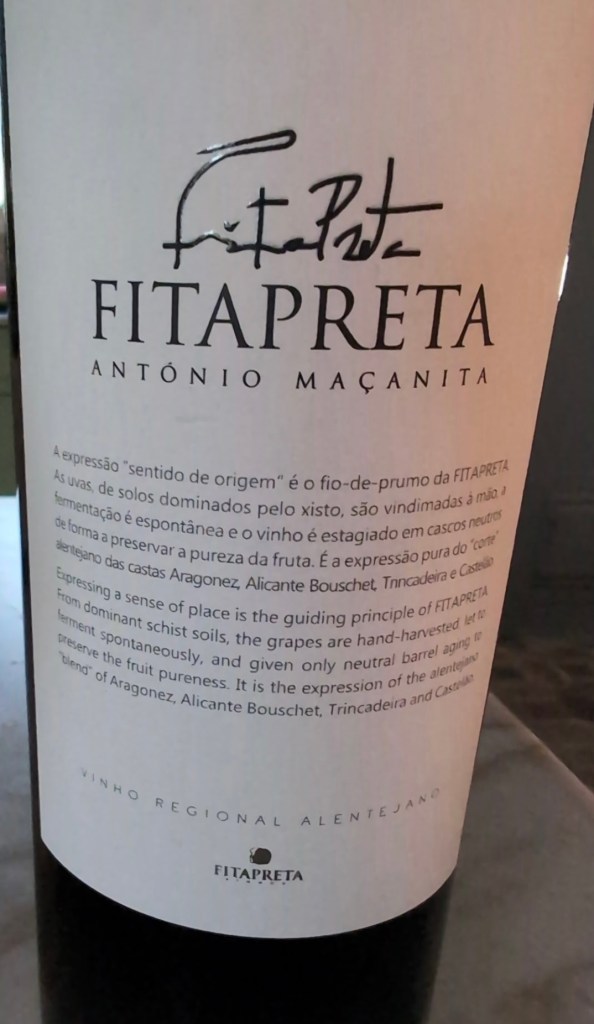
    António Maçanita doesn’t “make” wine so much as coax old stones into confession.

    His Alentejo parcels are relics of an empire- granite bones, schist scars- and he treats them like witnesses, not servants.

    No chemical gag orders, no heavy oak disguise. Just native grapes and the slow, un-coerced fermentation of memory.

    Below, four bottles that refuse to stay quiet.


    Os Paulistas 2021 – The Hermit’s Rebellion

    Vines once tended by monks now answer only to the night harvest.

    Tinta Carvalha, Castelão, Moreto—names the market nearly forgot- rise again in a field blend that tastes like a forest dreaming of fire.

    Cherry skin and wild strawberry spark first, then the deeper incense of leaf-mold and worn leather.

    Tannins whisper, acidity prowls.

    You drink it and sense the cloister door creak: history escaping, not returning. I am sure that Umberto Ecco owns a few cases of Os Paulistas.


    Tinta Carvalha 2022 – The Ghost Grape

    Here’s Maçanita’s dare: a single, nearly extinct variety bottled like a headline.

    Pale ruby, light on the tongue, but sharpened by cranberry and pomegranate.

    Graphite flashes like struck flint.

    A wine that is as elegant as a Degas bailarina, that hums rather than shouts, showing Alentejo can be knife-edge fresh instead of furnace-heavy.

    Pair it with grilled sardines (yes!) or duck if you must, but it’s best alone, in the quiet argument between old and new Portugal.


    Indígenas 2022 – White Magic on Granite

    Arinto fermented by the yeasts that rode in on its own skin- a closed circuit of place.

    Citrus blossom, linden, a saline flick that smells of tide-pools after rain. Paradise.

    Texture like polished stone; acidity that draws a chalk line on the palate and dares you to cross.

    Serve it with shellfish if you’re polite, or just let it shatter the idea that Alentejo whites should be soft.


    Ilusionista 2023 – Sleight of Hand, Iron of Will

    Castelão, Aragonez, Moreto, Alicante Bouschet: a carnival of indigenous reds.

    The nose is all black plum, violet, a whiff of dry grass before lightning.

    On the tongue, it starts velvet and finishes with the grip of dark chocolate and council-floor debate- sweet talk followed by a motion to adjourn.

    Half aged in oak, half in steel, it balances opulence with a certain municipal Ebora Liberalitas Lulia discipline.

    A wine for long arguments and longer nights Roman style.


    All of these Fitapreta bottles are a rebuke to the international bland.

    These are not “market-ready” reds and whites; they are dispatches from an older Republic, a reminder that Portugal’s strength lies not in imitation but in remembering.

    Come for the tannins, stay for the existential clarity.

    Renato

  • A Tale of Three Cities

    It is a rare thing to measure life not in hours or days, but in moments plated and poured. Quality over quantity. Momentos.

    Portugal, with its stubborn sense of history and its reckless modern creativity, gave us exactly that. Three cities, three chefs, three tables, and an unbroken thread of joy that ran from the southern dried summer plains of the Alentejo through the azulejo hills of Lisbon and into the tough granite soul of Porto. Along the way, we toasted not only my wife Dawn’s birthday, beautiful and radiant as ever, but also my cousin Joana’s one-hundredth year. Imagine it: a century of life, celebrated alongside food so alive it defied the past.

    This was no ordinary trip. This was a tale of Évora, Lisboa, and Porto — three different stages, each with its own cuisine, its own wines, its own chorus of history and invention.


    Évora- Fitapreta Cozinha do Paço

    The first stage: Évora, sprawled across the Alentejo plains where light feels older, more golden, as if it has learned patience from the cork oaks. Here stands a 14th-century Morgado de Oliveira’s manor, lovingly restored by winemaker António Maçanita. The past has not been erased — it has been brought forward, dressed anew, the stones whispering of ancestors even as modern cuisine dances in the dining room.

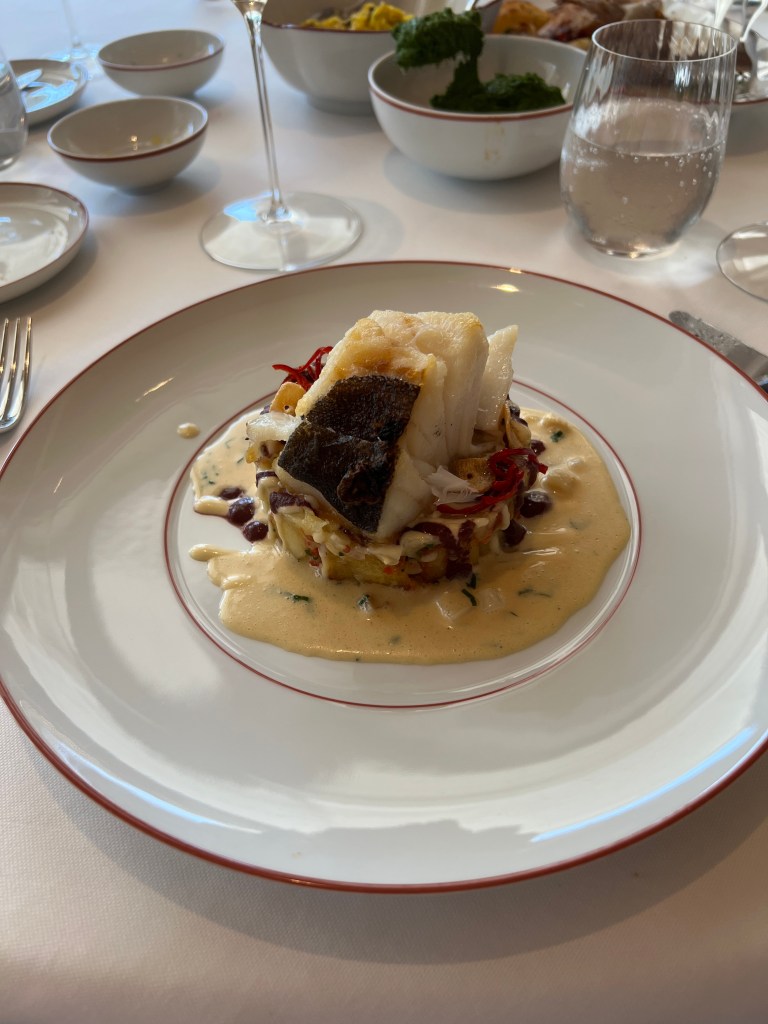
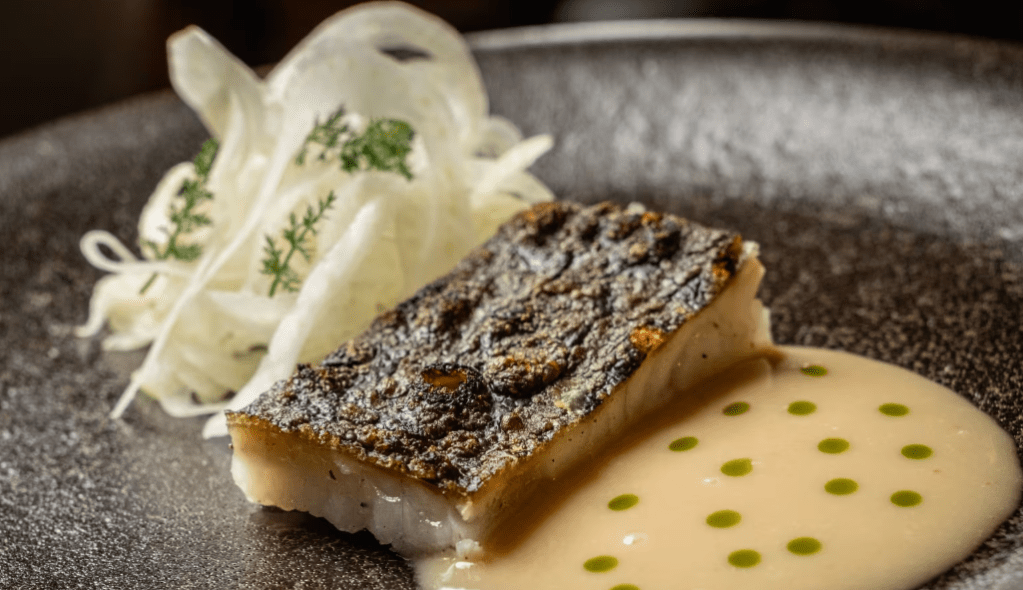
    Chef Afonso Dantas presides here, with the confidence of a man who knows his canvas is both ancient and daringly new. One dish captured it all: turbot fish in beurre blanc with shredded fennel salad. The turbot was velvet and sea-salt, a swimmer reborn in butter and acidity, while the fennel sliced through like a memory of anise on a hot day. It was as if the straw yellow Alentejo plains themselves had leaned in and whispered: “Yes, we can be delicate too.”

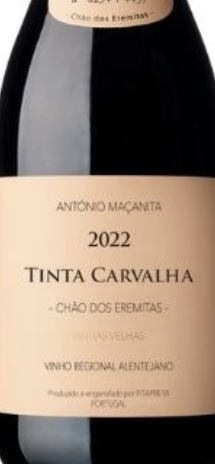
    The wine? Fitapreta’s Tinta Carvalha 2022. Rare and rebellious, this grape has been resurrected from near obscurity, much like the manor itself. The glass offered ripe raspberries and crushed cherries, laced with spice, floral whispers, even white tea. A licorice-tinged finish carried it all away. It was not just a pairing — it was a resurrection, proof that Portugal keeps the best parts of its past alive while reinventing the rest.

    Screenshot

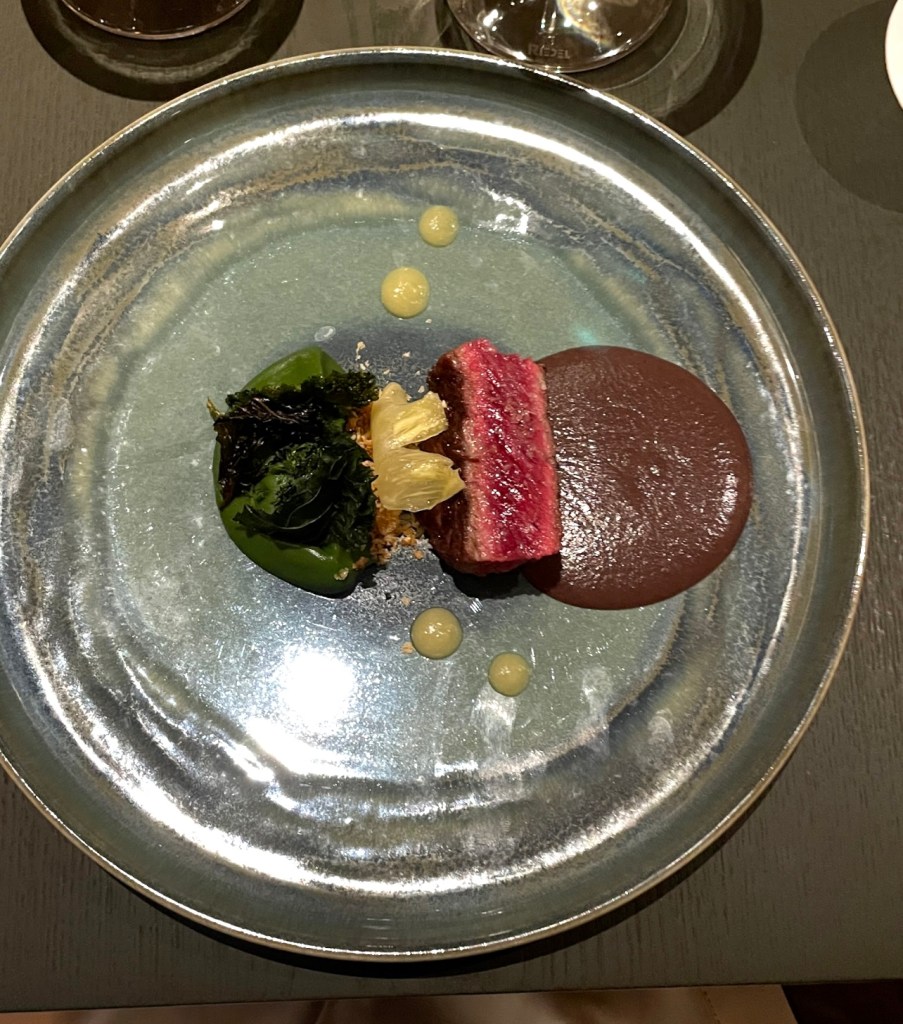
    An honorable mention here must go to the tomato slice made of lamb with an egg yolk glaze. A trick of the eye, a sleight of hand: tomato as meat, meat as tomato, the yolk binding the illusion. We took the challenge. It was rich and intense. It was culinary mischief at its finest.

    And through it all, Dawn and I sat near a window in the hush of this historic manor, celebrating her birthday — romance layered atop history, butter layered atop turbot. A love story wrapped in stone walls and poured into beautifully produced long-stem wine glasses.


    Lisbon- Suba

    From Évora’s plains, we ascended into Lisbon, to the Palace of Santa Cataria in Bica, near Bairro Alto. History again, but this time filtered through minimalist renovation — heavy walls holding space for light. To me since I was a child, Lisbon is always a city of contradiction: steep streets, wide horizons; deep history, restless reinvention. Suba embodies this tension perfectly.

    Chef Fábio Alves orchestrates here with elegance and a wink. His dish called Exchange was nothing less than an argument in edible form: tuna laid against a Bolhão Pato flavored oyster foam, crowned with caviar, and grated dried tuna like sea-dust falling over the plate. It was bold as if Poseidon himself had created it.

    The wine was equally astonishing: Quinta de San Michelle Malvarinto de Janas 2022. A marriage of Arinto and Malvasia, it danced between sharp minerality and lush body. Notes of honeysuckle and white peach sang, while an herbaceous whisper grounded it. Together with the dish, it felt like Lisbon itself: sharp, lush, contradictory, and alive.

    An honorable mention here was our first momento- the Casa dish: alheira, codfish, and cornbread wafer, topped with a quail yolk and smoked in a glass box. It was a conjuring trick, a theatrical reminder that food is performance as much as sustenance. Frank and John were with us at this table. Family and friends bound by food, wine, and the city’s golden evening.

    If Évora had been romantic intimacy, Lisbon was social theater. We toasted friendship, invention, and the city’s refusal to stay still.


    Porto- Cozinha das Flores

    Finally, Porto. Granite and iron, river and salt. A city of merchants and poets, of Douro ports and Atlantic winds. Here, five minutes from the Douro itself, sits Cozinha das Flores, Chef Nuno Mendes’ temple of modern cooking. Unlike Évora’s manor or Lisbon’s palace, this is modernity with its sleeves rolled up — wood-fueled oven glowing at the center, a primal fire wrapped in sophistication. It reminded Dawn of Charleston’s F.I.G., but with a Portuguese accent, more fado than cool indie.

    The dish that defined it: Turnip Natas with Caviar. Creamy, earthy turnip folded into pastry, then adorned with the briny decadence of caviar. It was humble root meets high luxury, Portugal’s peasant soil shaking hands with its cosmopolitan future. A bite of paradox, perfectly balanced.

    The wine: Niepoort V.W. Bical and Maria Gomes Vinhas Velhas Branco Bairrada 2021. Pale yellow, sharp with acidity, yet rounded by candied citrus and verbena. Its saline finish was like seawater washing stones clean. Paired with the turnip natas, it was electric- soil and sea, root and brine, a reminder that Portugal thrives where opposites meet.

    Even the couvert here was unforgettable: sourdough, with the best churned butter I ever tasted, and an alheira dip mixed with a cured egg yolk. Simple, primal, but done with such devotion it felt like a benediction. Even the server called it “our beautiful couvert”. Dawn and I dined alone again here, the romance rekindled by modern firelight. Porto gave us resilience and refinement with its granite soul, and we answered with gratitude.


    Reflection-The Table as Time

    So what was this journey? Three cities, three chefs, three tables. But beneath it, one story: food and wine as time machines. In Évora, the past resurrected- that’s where Dawn and I got engaged in 1998. In Lisbon, the present performed. In Porto, the future ignited. “Is it past, or is it future?”, asked the man from another place in Twin Peaks.

    And alongside, two celebrations: Dawn’s birthday, radiant as a candle against the centuries; and Joana’s hundredth, a reminder that longevity is its own feast. Between them stretched friendship, love, family- the reasons we celebrate, eat, and drink.

    Portugal gave us more than meals. It gave us proof that life can be measured in turbot beurre blanc, in oyster foam and caviar, in turnip natas and saline wines. That memory can be held in a glass, that laughter can rise like smoke from a glass box, that history can be restored one manor, one palace, one oven at a time.

    It was, in the end, a tale of three cities — but also a tale of us, at the table, together.

  • Radical Structure: Grace Jones, Gigondas, and the Art of Reinvention

    There are covers. And then there are conquests.

    When Grace Jones released Warm Leatherette in 1980, she wasn’t paying tribute. She was declaring dominion. With surgical precision, she dismembered rock, punk, and soul standards, stripped them of sentiment, and reconstructed them in her own image: glacial, muscular, unapologetically angular. It wasn’t nostalgia—it was design. The production, helmed by Chris Blackwell and Alex Sadkin at Compass Point Studios, became a workshop in sonic geometry. And what emerged was something rare in music: a reinvention with structure and soul intact.

    This, too, is Gigondas.

    Often mistaken for a junior sibling to Châteauneuf-du-Pape, Gigondas is no tribute act. It is not a rustic echo nor a budget version. It is a revision—a rethink of what Southern Rhône wine can be when elevation, limestone, and deliberate structure take the wheel.


    Discipline, Not Decadence

    Châteauneuf-du-Pape has history, prestige, and the opulence to match. Like the original versions of Jones’ cover songs—from The Pretenders to Roxy Music—there is richness, elegance, and sometimes a touch of self-satisfaction. These wines are layered, baroque, and often sun-drenched to the point of excess.

    But Gigondas tightens the belt. It climbs higher. Its vines cling to the Dentelles de Montmirail like dancers suspended in tension. The result? A wine that trades opulence for edge—with firm tannins, bracing minerality, and a wildness Châteauneuf sometimes smooths away in polish.

    Likewise, Warm Leatherette trades the velveteen lushness of disco for the lean, dubbed-out rigor of reggae and post-punk. There is still rhythm. Still beauty. But it is hard-earned. Structured. Controlled.


    The Compass Point of the Rhône

    Listen closely to “Private Life.” What you hear is restraint weaponized. Sly and Robbie do not overplay; they undermine. Every empty space is deliberate. Every note a provocation. Grace doesn’t sing the song—she inhabits it with quiet authority. The production is immaculate not in its fullness, but in its balance. A masterclass in subtraction.

    Gigondas behaves the same way. Where Châteauneuf might drape itself in fourteen grape varieties and a robe of alcohol, Gigondas more often narrows the cast to Grenache, Syrah, and Mourvèdre, and lets the terrain dictate tone. Think black cherries under tension. Think rosemary and crushed rock. Think earth and steel held in suspense.

    This is not minimalism for fashion’s sake—it is structure with intent.


    Voice and Terroir: The Signature

    Grace Jones’ voice, like a Gigondas hillside, is elemental. Cold, regal, androgynous. You don’t listen to her for comfort. You listen for clarity, for authority. Likewise, you don’t drink Gigondas for plushness—you drink it for definition. For its verticality. For the way it commands attention without screaming.

    Jones redefined the song. Gigondas redefines the blend. Both are acts of authorship, not mimicry.


    Final Movement: On Not Playing It Safe

    In a world that too often rewards repetition and formula—whether in winemaking or pop music—Warm Leatherette and Gigondas remind us of a finer tradition: reinvention with backbone.

    Structure does not mean rigidity. It means freedom within form. It means letting terroir—or rhythm—speak without being drowned in overproduction or oak. It means respecting the original material not by preserving it, but by challenging it. Reworking it. Owning it.

    Grace Jones did not cover songs. She colonized* them.

    And Gigondas does not imitate Châteauneuf. It dismantles the hierarchy and builds something fiercer, higher, and less forgiving—but every bit as worthy.

    So next time you hear the bassline of “Private Life” roll in like distant thunder, or sip a Gigondas with its austere seduction and iron tannins—remember: some of the most lasting works of art come not from invention, but from the ruthless reinvention of what was once familiar.


    Footnote

    *On the Use of the Word “Colonize”

    When I say Grace Jones colonized the songs she covered, I mean it in the full, deliberate sense: she took control, imposed her own aesthetic regime, and rewrote the power structure of the original material. This is not a flippant metaphor. It is a statement about authorship, domination, and cultural inversion.

    Jones—a Black, Caribbean woman—entered a Euro-American songbook and didn’t just contribute. She seized the frame. Like a post-imperial mirror, she turned the logic of colonization back on the canon itself: occupying it, reshaping it, and radiating sovereign cool from its center.

    This is not a celebration of colonialism. It’s a reversal of it—and an acknowledgment that some revolutions in music and wine happen not through polite homage, but through forceful reinterpretation.

    Just as Gigondas refuses to kneel before Châteauneuf, Jones refuses to sing someone else’s song the way they intended it. She doesn’t ask for space. She takes it.

  • Popes, Punks, and Posers: What Your Wine Says About You

    In early America, hierarchy was brutally binary: you either owned land or you didn’t. Titles were gone, coats of arms discarded, and the powdered wigs left behind with the old world. In this raw new republic, land was the currency of power. If you had it, you were Somebody. If you didn’t, you worked for Somebody—willingly if you were lucky, forcibly if you were not. Race and gender? Let’s save that for a separate study—perhaps one paired with the opaque complexity of Nebbiolo.

    This wasn’t the old European social class system, with its centuries of codified manners and class-based choreography. America promised a clean slate—but let’s not kid ourselves: it simply replaced inherited privilege with economic absolutism. Karl Marx would’ve drawn a line down the page—haves vs. have-nots—and claimed he had captured the essence. No offense to Karl’s pedantic economic determinism, but today’s blog is about something far more nuanced—and perhaps far more delusional.

    Because what happens when those landless souls get a little money? They “climb”. And everyone cheers—Hallelujah, the American Dream lives! But the climb is economic, not cultural. You can buy the house, but you can’t buy the instincts. The lack of ease, the cultural dissonance—it shows. You’re out of sync, out of step, and you don’t even hear the music. And the tragedy? You don’t know it. You mistake consumption for sophistication. You think you’ve arrived, but what you’ve bought is the costume, not the character.

    But what if—what if—you embraced your place in the order? Not with shame, but with clarity. What if you didn’t pretend? Then comes liberation. You are no longer a confused social climber clutching your Châteauneuf du Pape with trembling hands. You are proud of your pint, your laced boots, your corner of the world. You’re not imitating the elite—you’re owning your own code. This is cultural class consciousness—not in the Marxist sense, but in the very real, very grounded awareness of who you are and who you’re not.

    And that, dear reader, is where the English Oi! movement makes its entrance. The cultural soundtrack of a working class that didn’t want to be invited to the gala. They brought their own beer. They weren’t interested in sophistication—they were interested in truth. No illusion. No pretense. Just combat boots on concrete and volume at 11.

    Now you’re probably wondering what the hell all this has to do with wine. Isn’t this a wine blog? Why are we talking about hierarchy and street punk music? Ah—but you see—that’s exactly the point. Wine, like music, like class, carries meaning. Some bottles wear their history like a velvet robe. Others show up with a twist cap and no apologies. And just like people, some wines know who they are—and some are desperately trying to be something they’re not.

    Let’s uncork that idea.

    The first time I heard the words Châteauneuf-du-Pape outside a wine afficionado’s mouth was in a Beastie Boys track. Yes, the Beasties. Body Movin’, to be precise. And in true New York City swagger, Ad-Rock spits:

    “Like a bottle of Châteauneuf-du-Pape / I am like a fine wine when I start to rap.”

    Now that—that—is cultural fluency. Ad-Rock didn’t say Merlot. He didn’t say Bordeaux. He went straight for the Southern Rhône’s aristocratic apex. Châteauneuf-du-Pape. The wine of popes. A bottle that doesn’t just taste rich—it signals it. And in one clever line, he placed himself in that hierarchy. Not by accident. With intention. Because if you know, you know. And if you don’t? You miss the reference, just like you miss the rhythm of a class culture that isn’t yours.

    So yes, this is a wine blog. But it’s also a meditation on how we perform identity. Through music. Through what we drink. Through how we pretend—and how we sometimes, beautifully, don’t.

    Let’s begin where the vines grow thick with history: Southern Rhône.

    Châteauneuf-du-Pape literally means “the pope’s new castle.” In the 14th century, during the Avignon Papacy, the puppet Pope Clement V established residence in Avignon, leaving the Vatican behind, and had an appetite for great wine besides an appetite for the destruction of the Knights Templar.

    To this day, Châteauneuf-du-Pape bottles bear a papal seal etched into the glass—a literal mark of sanctioned quality. This wine knows it is on top. It was born into it. And like old money, it doesn’t shout—it assumes you already know.

    Compare that to Côtes du Rhône. A wide appellation with wine that’s often affordable, drinkable, and unpretentious. It’s not worse—it’s just not trying to impress your sommelier cousin at Thanksgiving. It’s the garage band to Châteauneuf’s cathedral choir. It does the job and gets you happy. But it’ll never be name-checked by a rapper—unless irony is involved.

    Now back to class consciousness. Enter Oi!—a raw, loud, unapologetically working-class genre that emerged from the industrial heart of England in the late 1970s. It wasn’t interested in the pomp of prog rock or the pretension of art school punk- right Colin Newman? Oi! was boots, pubs, and shouting back at a system that never listened. It didn’t want to be accepted by elites. It reveled in being dismissed. Just like a $9 bottle of Côtes du Rhône with a screw cap that still pairs perfectly with sausage and vinyl.

    In contrast to America’s illusion of class mobility—the “if you make enough money, you’re classy now” delusion—Oi! never wanted to climb the social ladder. It pissed on the rungs. It lived, drank, and shouted in its own space. And that is the entire point: cultural confidence isn’t about climbing. It’s about claiming.

    So what does it mean when you buy a bottle of Châteauneuf-du-Pape? You’re not just buying wine. You’re buying into a legacy, a narrative. You are, even if just for a night, participating in a pageant of aristocracy—papal robes replaced by linen napkins and stemmed glasses.

    And what does it mean when you unapologetically drink a humble but great Côtes du Rhône on a Tuesday with pizza and watch reruns? That maybe you’re more self-aware than the guy swirling Burgundy while talking about “terroir.” Maybe you don’t need the seal, the prestige, the pope.

    So Kyle, you asked why another wine blog? Because this isn’t just about wine. It’s about stories, symbols, and the delusions we drink with our Merlot. It’s about knowing when to pour the Pape and when to pop the proletariat red with pride.

    Wine doesn’t lie. But we do—to ourselves. And sometimes, we need a little Châteauneuf clarity or Oi! honesty to break the spell.

    Here’s to knowing who you are—whether you’re wearing a cassock or a Fred Perry shirt.

  • To Glass or not to glass?

    Willy’s place outside Girona is a shrine to one thing and one thing only: Bordeaux stored in glass. Thick bottles, deep punts, proper corks—stuff that feels like it should come with a Latin mass and a choir. Willy pours, he drinks, he smiles. Ask for tasting notes and he waves you off like you just suggested adding ice cubes. “It’s good. Next question.” End of seminar. You like that attitude, don’t you?

    Step outside Casa Willy and real life smacks you—mortgage/rent, traffic, and supermarket end-caps stacked with wine dressed up as juice boxes. Yes, apparently we now drink from cardboard bladders and aluminum soda cans. Because nothing screams haute viticulture like ripping a foil pouch and squeezing out three liters of mystery red next to the dishwasher.

    The evangelists have their talking points: cheaper, lighter, greener! Great—so is tap water. Bag-in-box “keeps fresh for a month,” they say. Translation: the wine was so forgettable you needed 30 days to finish it. Cans are “perfect for the beach.” True—because when the tide rolls in, nobody can taste that your rosé came pre-carbonated with a hint of aluminum rim.

    Look, I’m not blind. Ninety-something percent of wine is guzzled within the week. Most of it never needed ageing, never deserved glass, and probably tastes the same pouring from a Lands End rain boot. But a bottle still does two magical things the box brigade can’t touch: it lets a wine grow up and it tells you the maker cared enough to dress the liquid properly. A cork is a promise; a pull-tab is a shrug.

    And spare me the sustainability sermon. You want to save the planet? Skip a flight to Ibiza, plant a tree, ride a bike. Don’t ask me to celebrate Nebbiolo in a Capri-Sun pouch as ecological heroism. See what you did Tom?

    So here’s the math:

    • Collectible, age-worthy wine: needs glass, period.
    • Everyday plonk: sure, shove it in a milk carton if you must. Just don’t pretend it’s a revolution.
    • Box and can drinkers: congratulations—you’ve traded ritual for convenience. Enjoy your adult juice box; I’ll keep my corkscrew and my leather bottle bitch bag.

    Willy will keep swirling his Chateau Margaux, Chateau Haut- Brion, and Chateau Lafleur, secure in his slightly dusty temple of glass. I’ll stand beside him, sarcasm ready, watching the cardboard crusade march past like a discount parade. When the cork pops, we’ll toast to real bottles—and raise a gracious second toast to everyone else, sipping their Pinot from metal tubes, convinced they’ve hacked wine.

    Because in the end wine is supposed to taste good. A bottle guarantees at least the possibility of greatness. A box guarantees…a handle. Choose wisely.

    Thanks Tom and Tripp.

  • Wine as Empire: Camões and the Ferment of Fitapreta

    To drink Fitapreta is to drink with ghosts—the kind that do not haunt, but command. In each glass, António Maçanita has trapped the same fury that Luís de Camões once bound into verse. This is not wine for the docile or the merely curious. This is wine for the discontented, for those who feel in their marrow what Camões wrote of the Portuguese spirit: “Dai-me uma fúria grande e sonorosa” (“Give me a great and sonorous fury,” Canto I, 4). Fitapreta is not designed to comfort—it’s designed to summon. And what it summons is a memory: of empire, of defiance, of men who walked toward the edge of the known world with their backs straight and their fates unrepentant.

    Risk is the wine’s blood. Camões consecrated risk as the original virtue of the Portuguese: “Ó fortes, que por obras valerosas / Se vão da lei da Morte libertando” (“O brave men, whose valorous deeds / Free them from the law of Death,” Canto I, 2). Maçanita’s viticultural decisions mirror that ethos. Who else has the audacity to farm abandoned varietals in Alentejo’s punishing heat, to vinify wines with minimal intervention in a market addicted to polish and predictability? To make Fitapreta is to stand at the prow of one’s own fleet, daring the storm to strike. It is a practice not of safety, but of sovereignty.

    Adventure, in Camões’ telling, is both sublime and perilous—a dance with fate under black sails. The poet’s Adamastor does not merely threaten death; he incarnates it: “E eu sou aquele oculto e grande Cabo / A quem chamais vós outros Tormentório” (“I am that hidden and mighty Cape / Which you call Tormentor,” Canto V, 39). Maçanita’s wines speak in the same register. They resist easy drinking. They announce themselves with tension, with spice, with wild mineral veins that cut across the palate like rigging in a gale. Fitapreta is no perfumed token of terroir—it is a navigational act, a wine that demands direction and dares the drinker to take the helm.

    Assertiveness here is not swagger—it is the quiet certainty of purpose. When Camões invokes Portugal’s right to glory, it is not meek: “Cessem do sábio Grego e do Troiano / As navegações grandes que fizeram” (“Let the voyages of the Greek and Trojan sages / Cease to be praised,” Canto I, 3). The poet replaces Homeric antiquity with Portuguese modernity, just as Maçanita replaces tired oenological mimicry with native command. Fitapreta does not apologize for being Portuguese. It asserts that to be Alentejano is not to be lesser—it is to be elemental. Granite, heat, tension, structure—this is a wine that knows what it is, and says so without blinking.

    Grit, finally, is the muscle beneath it all. Camões knew hardship intimately—wounded in Ceuta, shipwrecked near Cambodia, begging in the streets of Lisbon. Yet even from ruin, he composed the epic of a nation: “E entre gente remota edificaram / Novo Reino, que tanto sublimaram” (“And among distant peoples they established / A new kingdom, which they so greatly exalted,” Canto I, 20). Likewise, Maçanita doesn’t craft his wines from privilege, but from pressure—economic, climatic, cultural. Alentejo is a land of struggle, and Fitapreta bears its scars like medals. This is not a wine made to charm. It is a wine made to last.

    Camões gave Portugal its voice; Maçanita distills that voice into matter. In Fitapreta, we taste the persistence of a myth, reforged in iron and blackberry, in salt and sun. This wine does not simply tell a story—it continues one. A story of men who defy, who wander, who endure. A story that Camões began with a quill—and that Maçanita now continues, bottle by bottle, like a cannon shot across time.

    Screenshot
  • Stevens Institute of Technology Wine Tasting June 7, 2025

    Stevens Institute of Technology is hosting a wine tasting during Alumni weekend! And no, it’s not just a social mixer with stemware. It’s a full-on cultural showdown:

    Old World Whites squaring off against American West Coast Reds.

    Let’s not pretend this is casual. It’s a referendum on style, legacy, and whether your palate was raised on limestone or blackberry jam.

    🥂 The Old World Whites

    These are wines with bones.

    Think Soave, Pouilly-Fuisse, and a Etxaniz Txakolina enough to scare a beginner. These wines speak in quiet poetry—acidity, minerality, structure. They demand your respect. And they don’t care if you give it.

    You don’t drink these to relax.

    You drink them to listen.

    🍷 The West Coast Reds

    These are wines that walk in loud and confident.

    California Zinfandel, Oregon Pinot Noir, and a Cabernet that’s been to Napa boot camp. They’re juicy, plush, and love being liked. The kind of wines that tell you exactly what they are, and hope you’ll Instagram it.

    They’re delicious.

    They’re fun.

    They’re not subtle.

    And that’s the point.

    Old World vs. New Coast. History vs. swagger. Tension vs. pleasure.

    And if we’re lucky, someone will accidentally say “buttery” and be gently corrected by a grad student in a cardigan.

    See you there.

  • Welcome to NEUwine!

    Welcome to NEUwine—where we don’t just drink wine; we interrogate it, worship it, and dissect it like it’s a cultural relic smuggled out of a ruined monastery. If you’re the kind of person who gets giddy about obscure grape varietals, terroir-driven microclimates, or the socio-political legacy of Burgundy’s 13th-century monks—then congratulations: you’ve found your people.

    This isn’t your aunt’s wine blog with sangria recipes and rosé emojis. NEUwine is where wine gets the respect (and sarcasm) it deserves. We’ll pair wines not just with cheese, but with philosophy, music, architecture, and unhinged historical rabbit holes. Why? Because wine doesn’t exist in a vacuum—and neither do you.

    Expect:

    • Deep dives into overlooked regions (yes, we see you, Jura).
    • Tasting notes with teeth. If a wine smells like crushed violet and regret, we’ll say it.
    • Cultural essays that connect what’s in your glass to what’s on your bookshelf—or your ballot.
    • Occasional mockery of lazy palettes and overhyped vintners. (Looking at you, Napa Cab with a $300 price tag and the complexity of a blueberry muffin.)

    So pour something real, settle in, and prepare to nerd out like a Renaissance heretic in a Bordeaux seminar. We’re not here to be agreeable—we’re here to be alive.

    Neumod approves.

     Neumod, your unapologetic guide to the Dionysian frontier