It is a rare thing to measure life not in hours or days, but in moments plated and poured. Quality over quantity. Momentos.
Portugal, with its stubborn sense of history and its reckless modern creativity, gave us exactly that. Three cities, three chefs, three tables, and an unbroken thread of joy that ran from the southern dried summer plains of the Alentejo through the azulejo hills of Lisbon and into the tough granite soul of Porto. Along the way, we toasted not only my wife Dawn’s birthday, beautiful and radiant as ever, but also my cousin Joana’s one-hundredth year. Imagine it: a century of life, celebrated alongside food so alive it defied the past.
This was no ordinary trip. This was a tale of Évora, Lisboa, and Porto — three different stages, each with its own cuisine, its own wines, its own chorus of history and invention.
Évora- Fitapreta Cozinha do Paço
The first stage: Évora, sprawled across the Alentejo plains where light feels older, more golden, as if it has learned patience from the cork oaks. Here stands a 14th-century Morgado de Oliveira’s manor, lovingly restored by winemaker António Maçanita. The past has not been erased — it has been brought forward, dressed anew, the stones whispering of ancestors even as modern cuisine dances in the dining room.
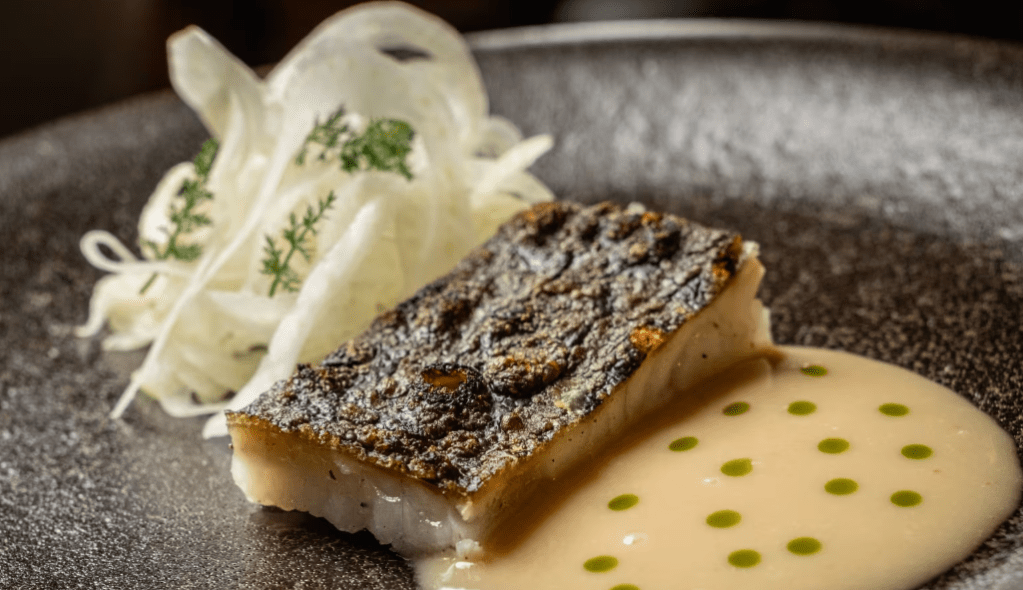
Chef Afonso Dantas presides here, with the confidence of a man who knows his canvas is both ancient and daringly new. One dish captured it all: turbot fish in beurre blanc with shredded fennel salad. The turbot was velvet and sea-salt, a swimmer reborn in butter and acidity, while the fennel sliced through like a memory of anise on a hot day. It was as if the straw yellow Alentejo plains themselves had leaned in and whispered: “Yes, we can be delicate too.”
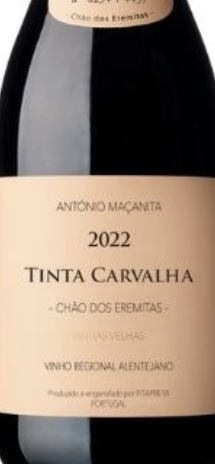
The wine? Fitapreta’s Tinta Carvalha 2022. Rare and rebellious, this grape has been resurrected from near obscurity, much like the manor itself. The glass offered ripe raspberries and crushed cherries, laced with spice, floral whispers, even white tea. A licorice-tinged finish carried it all away. It was not just a pairing — it was a resurrection, proof that Portugal keeps the best parts of its past alive while reinventing the rest.
An honorable mention here must go to the tomato slice made of lamb with an egg yolk glaze. A trick of the eye, a sleight of hand: tomato as meat, meat as tomato, the yolk binding the illusion. We took the challenge. It was rich and intense. It was culinary mischief at its finest.
And through it all, Dawn and I sat near a window in the hush of this historic manor, celebrating her birthday — romance layered atop history, butter layered atop turbot. A love story wrapped in stone walls and poured into beautifully produced long-stem wine glasses.
Lisbon- Suba
From Évora’s plains, we ascended into Lisbon, to the Palace of Santa Cataria in Bica, near Bairro Alto. History again, but this time filtered through minimalist renovation — heavy walls holding space for light. To me since I was a child, Lisbon is always a city of contradiction: steep streets, wide horizons; deep history, restless reinvention. Suba embodies this tension perfectly.
Chef Fábio Alves orchestrates here with elegance and a wink. His dish called Exchange was nothing less than an argument in edible form: tuna laid against a Bolhão Pato flavored oyster foam, crowned with caviar, and grated dried tuna like sea-dust falling over the plate. It was bold as if Poseidon himself had created it.

The wine was equally astonishing: Quinta de San Michelle Malvarinto de Janas 2022. A marriage of Arinto and Malvasia, it danced between sharp minerality and lush body. Notes of honeysuckle and white peach sang, while an herbaceous whisper grounded it. Together with the dish, it felt like Lisbon itself: sharp, lush, contradictory, and alive.

An honorable mention here was our first momento- the Casa dish: alheira, codfish, and cornbread wafer, topped with a quail yolk and smoked in a glass box. It was a conjuring trick, a theatrical reminder that food is performance as much as sustenance. Frank and John were with us at this table. Family and friends bound by food, wine, and the city’s golden evening.
If Évora had been romantic intimacy, Lisbon was social theater. We toasted friendship, invention, and the city’s refusal to stay still.
Porto- Cozinha das Flores
Finally, Porto. Granite and iron, river and salt. A city of merchants and poets, of Douro ports and Atlantic winds. Here, five minutes from the Douro itself, sits Cozinha das Flores, Chef Nuno Mendes’ temple of modern cooking. Unlike Évora’s manor or Lisbon’s palace, this is modernity with its sleeves rolled up — wood-fueled oven glowing at the center, a primal fire wrapped in sophistication. It reminded Dawn of Charleston’s F.I.G., but with a Portuguese accent, more fado than cool indie.
The dish that defined it: Turnip Natas with Caviar. Creamy, earthy turnip folded into pastry, then adorned with the briny decadence of caviar. It was humble root meets high luxury, Portugal’s peasant soil shaking hands with its cosmopolitan future. A bite of paradox, perfectly balanced.

The wine: Niepoort V.W. Bical and Maria Gomes Vinhas Velhas Branco Bairrada 2021. Pale yellow, sharp with acidity, yet rounded by candied citrus and verbena. Its saline finish was like seawater washing stones clean. Paired with the turnip natas, it was electric- soil and sea, root and brine, a reminder that Portugal thrives where opposites meet.

Even the couvert here was unforgettable: sourdough, with the best churned butter I ever tasted, and an alheira dip mixed with a cured egg yolk. Simple, primal, but done with such devotion it felt like a benediction. Even the server called it “our beautiful couvert”. Dawn and I dined alone again here, the romance rekindled by modern firelight. Porto gave us resilience and refinement with its granite soul, and we answered with gratitude.
Reflection-The Table as Time
So what was this journey? Three cities, three chefs, three tables. But beneath it, one story: food and wine as time machines. In Évora, the past resurrected- that’s where Dawn and I got engaged in 1998. In Lisbon, the present performed. In Porto, the future ignited. “Is it past, or is it future?”, asked the man from another place in Twin Peaks.
And alongside, two celebrations: Dawn’s birthday, radiant as a candle against the centuries; and Joana’s hundredth, a reminder that longevity is its own feast. Between them stretched friendship, love, family- the reasons we celebrate, eat, and drink.
Portugal gave us more than meals. It gave us proof that life can be measured in turbot beurre blanc, in oyster foam and caviar, in turnip natas and saline wines. That memory can be held in a glass, that laughter can rise like smoke from a glass box, that history can be restored one manor, one palace, one oven at a time.
It was, in the end, a tale of three cities — but also a tale of us, at the table, together.

 NEUwine
Leave a comment