The wine industry has spent the better part of a decade worrying about Gen Z.
They don’t drink wine, we’re told. They drink hard seltzers. Canned cocktails. Sweet alcoholic beverages with flavors that sound more like a chemistry experiment than something found in nature.
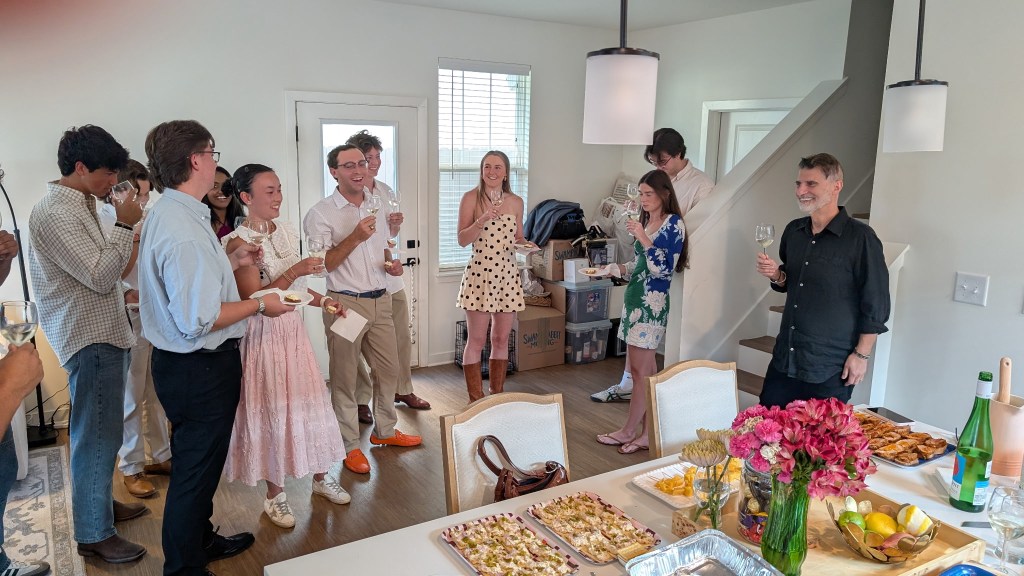
Last weekend in Greenville, South Carolina, sixteen young adults between the ages of 21 and 23 demonstrated that the problem isn’t wine.
The problem is that most people have never been introduced to it properly.
The evening began not with a lecture but with a drink: a White Port Spritz from Portugal, tonic and fresh mint over white port. Light, refreshing, aromatic- close enough to the seltzer instinct that nobody felt like they were being lectured, but honest enough that it tasted like it came from somewhere. That was the whole idea in miniature: meet people where their palates already are, then show them there’s more on the other side.
The tasting that followed was built around wines with personality, authenticity, and value. Not trophy wines. Not fruit bombs engineered to score points. Just honest bottles from places that have been making them for generations.
A Vinho Verde from Portugal’s Minho region opened things up, paired with marinated goat cheese on sourdough-bright acidity against creamy texture, and people started paying attention. From there the pairings moved through a Picpoul de Pinet with smoked fish dip from Jones Oyster Co., a peppery Grüner Veltliner cutting through aged Gouda, and a Beaujolais Gamay that found an unlikely, delighted match in garlic prawns and chorizo.
By the third or fourth pour, the questions had started.
*Why does my tongue tingle on the sides?*
*Why does this wine taste different after I take a bite?*
*Why do I like this one more than the last one?*
Nobody asked about critic scores. Nobody asked about brands. They asked about taste — which is, it turns out, exactly the education they’d never gotten.
Three ingredients kept resurfacing all night, in the food and in the wines alike: lemon, basil, garlic. Nothing complicated, nothing fashionable- just quality left alone to express itself. It’s the same philosophy that made a Southern Rhône blend sing next to pork tenderloin crostini and harissa, and it’s the throughline the whole menu kept quietly returning to.
Dinner brought the comfort-food turn- chicken parm on polenta cakes, prosciutto and mozzarella panini, meatball parm sliders — with a choice between Chianti Colli Senesi from Tuscany or an Oyster Bay Sauvignon Blanc from New Zealand. The choice itself was part of the lesson: different wines reward different palates, and there’s no wrong answer.
Then the finale: a Five Puttonyos Tokaji from Hungary alongside panna cotta with mixed berries and pistachios. For most of the room, it was their first real sweet wine — and the reaction was the one it always is. Surprise. Most people have spent their lives being told sweet wine is unsophisticated. Tokaji, balanced by that much acidity and complexity, argues otherwise in about four seconds.
The most encouraging moment happened the next day, when one of my son’s friends called him from a wine shop. She wasn’t buying her usual bottle of white Barefoot. She was looking for the wine she’d discovered at the tasting.
She bought it.
That single bottle told me more than any industry report on Gen Z and wine. Young adults don’t dislike wine. They dislike pretension, poor value, and being told what they’re supposed to enjoy.
Give them wines with authenticity and a story behind them. Give them the opportunity to taste.
The future of wine isn’t disappearing. It may simply be waiting for someone to pour the first glass.
Neumod


Leave a Reply